Write Everything. All The Time.

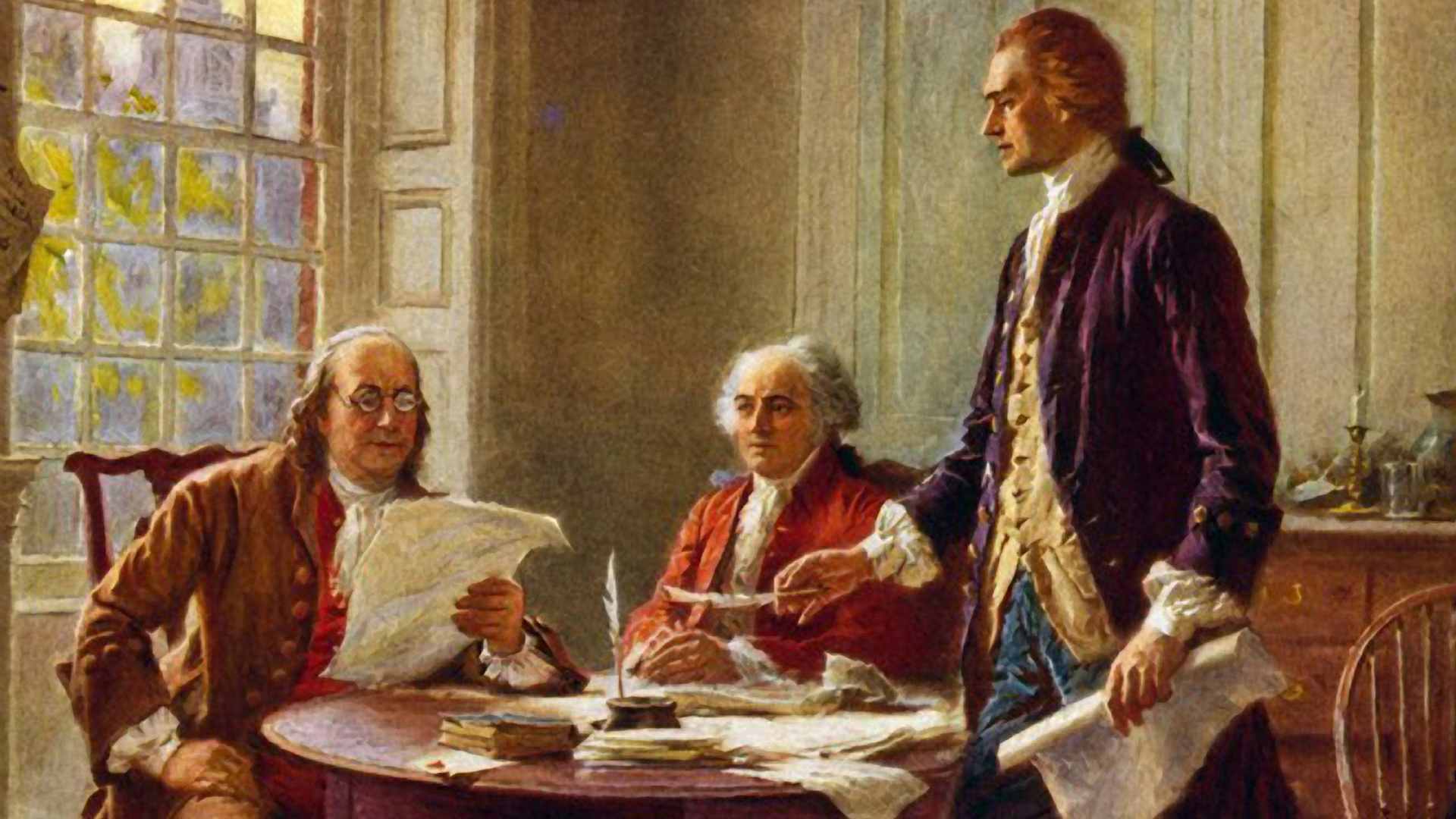
To coincide with the 250th anniversary of the United States of America, Walter Isaacson released a book titled "The Greatest Sentence Ever Written." It is referring to the second line of the Declaration of Independence:
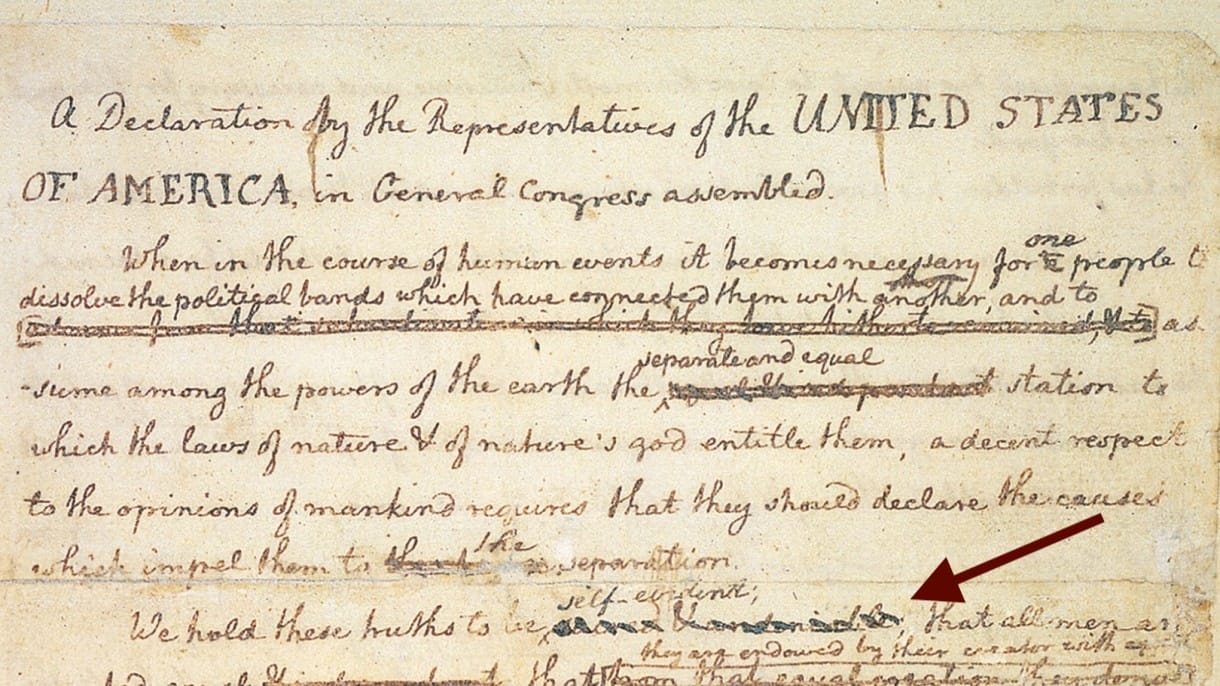
We hold these truths to be self-evident, that all men are created equal, that they are endowed by their Creator with certain unalienable Rights, that among these are Life, Liberty and the pursuit of Happiness.
The book disects the sentence, word by word, and gives explanation on how each one was decided and what it implied. For instance, why "self evident?"
(Thomas) Jefferson had started that second sentence by saying, “We hold these truths to be sacred.” And you see on that draft, the dark black slashes that Benjamin Franklin used when he was editing documents, and he changes “sacred” to “self-evident.” They were trying to create a new type of nation in which our rights were based on rationality, not on the dictates or dogma of a religion.
I really enjoyed the book and recommend it to anyone who enjoys history, writing, and meticulous thought.
Franklin and His Writing
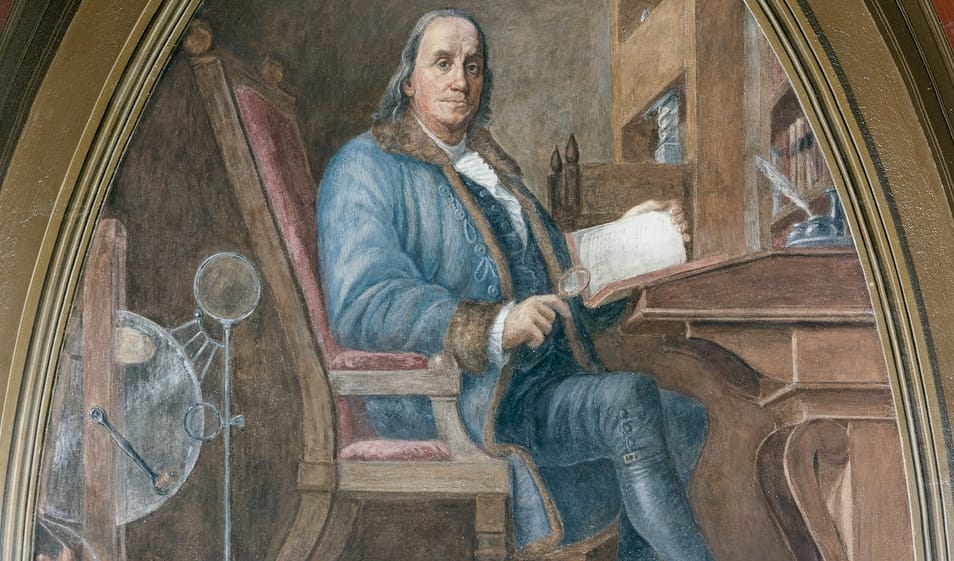
Among the document authors, Benjamin Franklin played a large role. The book details his additions, but one sidenote of the story really made me smile:
As for Franklin, his moral trajectory mirrored that of American history. Throughout his life, he kept a ledger of the mistakes he had made and how he had tried to rectify them. (emphasis added)
How great is that self accountability? More than that, how great is his dedication to writing? If you've read Franklin's biography (also by Walter Isaacson) then you know his constant effort of recording information.
With the capable apps and devices always with us, I agree: write everything, all the time.
Write Everything
There is an old adage that reads "To teach is to learn twice."
I propose that you can learn thrice if you learn, then write, then teach.
Here is a list of things I've taken to writing over the years (I'd love to hear...or read...your list) :
- This blog is one example. A little over five years ago, I committed to more regularly writing a certain number of words. It's turned out well...at least for me. I love to have a place online where my thoughts are recorded and easily shared. It's always fun when someone in real life says, "I read about your...." and we have a nice conversation.
- As written before, Candace and I record all medical visits in detail as soon as we leave the appointment (and sometimes during the conversation.) It has been so helpful to look back on doctor recommendations, prescriptions, names of staff, etc.
- When I visit a good restaurant, I'll add it to my places on Apple Maps. (Look up the location and find the "+" sign.) When added, it will give you a spot for notes that only you see. I write what I ordered, what I want to order next time, the name of the waiter, etc. I also do this for restaurants I read about and want to try. Over time, the collection has really grown and makes it easy to offer good recommendations.
- Over the last decade, I've given 200+ talks and presentations. I have each one of them written, word for word, and it's a treasure trove for me. I'm comfortable speaking unscripted or with just bullet points, but a written talk is better prepared and definitely better preserved. It's a record of what I learned while at the peak of my interest in that subject. While my memory fades, the digital ink does not. Also, I still receive requests for past messages I've shared and I'm glad I can quickly send a PDF copy.
- In our house, I run the finances. I enjoy it but Candace wonders what would happen if I was hit by a bus. Well, if I survived, we'd probably have more money to manage from a nice settlement. But if I didn't make it, she's happy to know that I have every detail of the accounts and their uses written securely in my notes app. There would be a lot to take in but at least it is all available there.
- Every time I repair anything in our house I write down what I learned, which tools it took, which parts were replaced, what mistakes I made, and a digital copy of the manual. It takes a lot of effort and occasional injury to learn it once. No reason to learn it a second time the hard way.
- Writing in a journal is a favorite habit. I haven't missed a day in decades and hope to keep it up until that bus gets me.
The list goes on and on. If I think it, I try to write it. Most things will never see the light of day but that's okay. It helps me clarify my thoughts and then it clears the mind for something new.
Put a Name On It
At the bottom of the Declaration of Independence, many of the writers and founding fathers put their name to this historical document. All of them did so at great risk. If the American Revolution had failed, the signers likely would have been tried and executed for treason. Even with victory, many of them suffered great personal and legal loss.
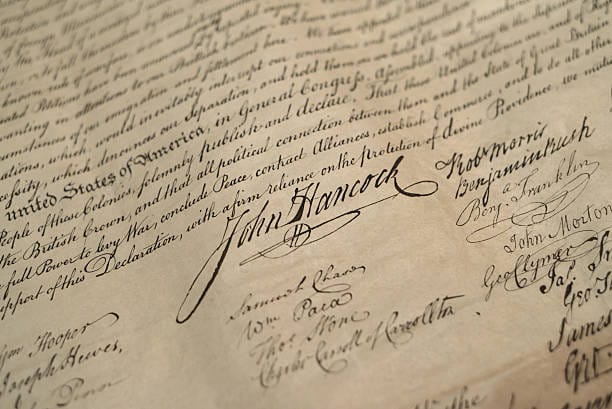
And you have to love John Hancock whose name was so big, so bold, and so legible that there was no doubt that he supported this declaration. His name is now used as a synonym of "signature."
It feels good to put your name on something you're proud of creating. Even two of our future presidents signed the declaration. (Jefferson and Adams)
With that in mind, this year I worked with a professional penman on a President's Day gift for our kids. I wrote small descriptions about each child, what they like about their name, their personalities, their approach on life, etc. Together, we created a fancy, legible, and unique signature for them to practice and use.
I hope they can proudly (and beautifully) add it to all of their writings throughout their life.
Feedback? Send me an email.